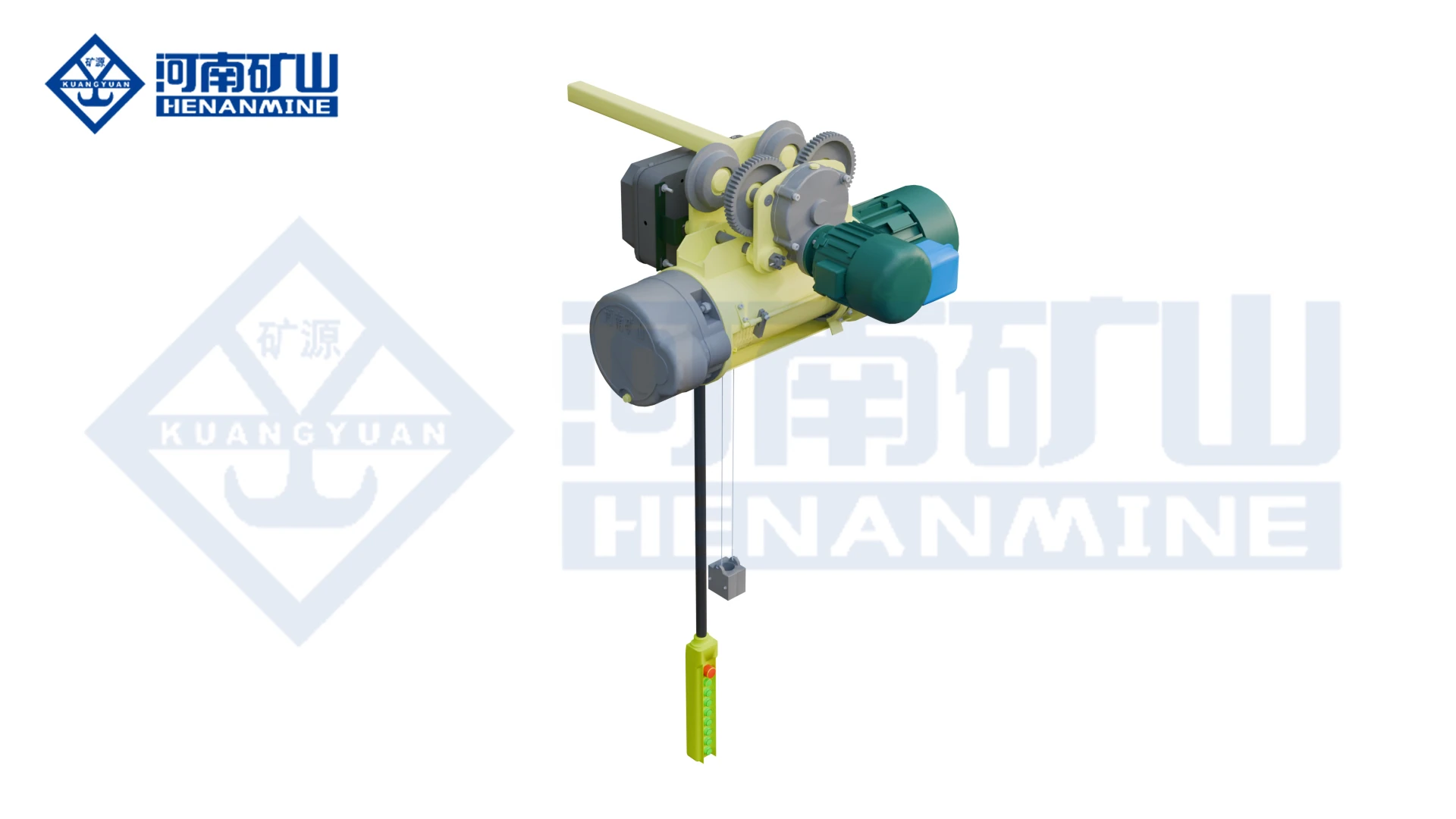
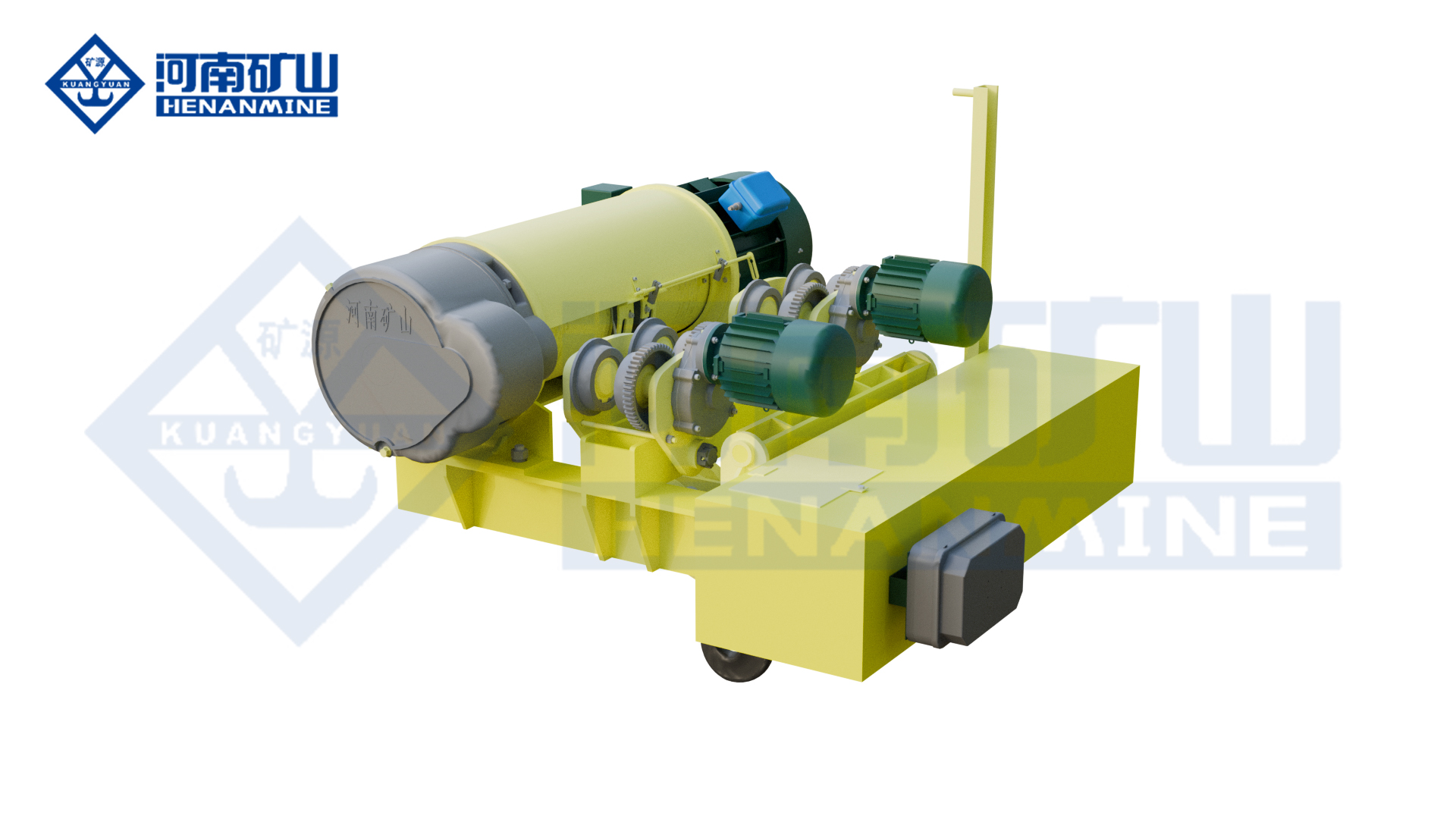
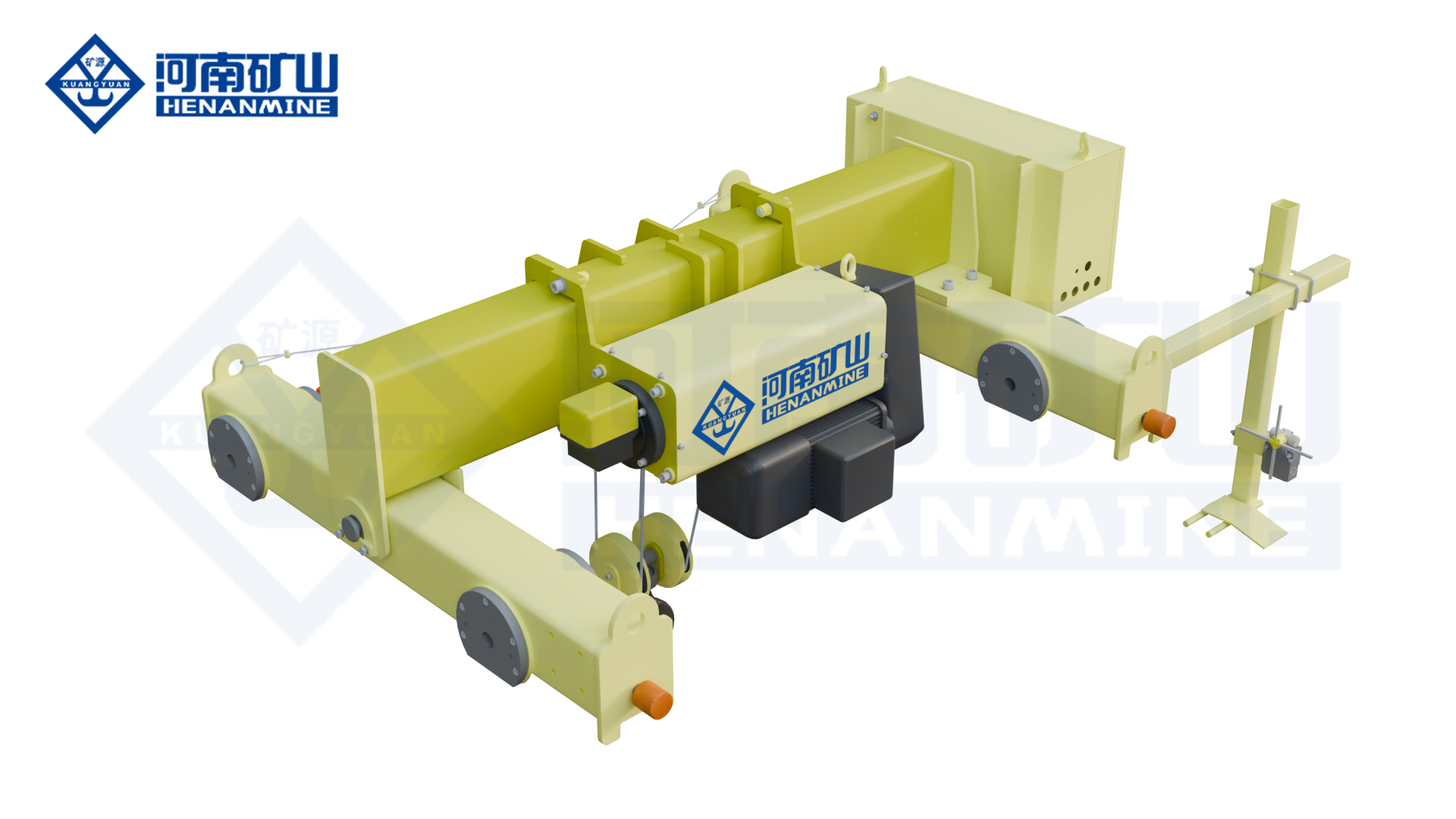
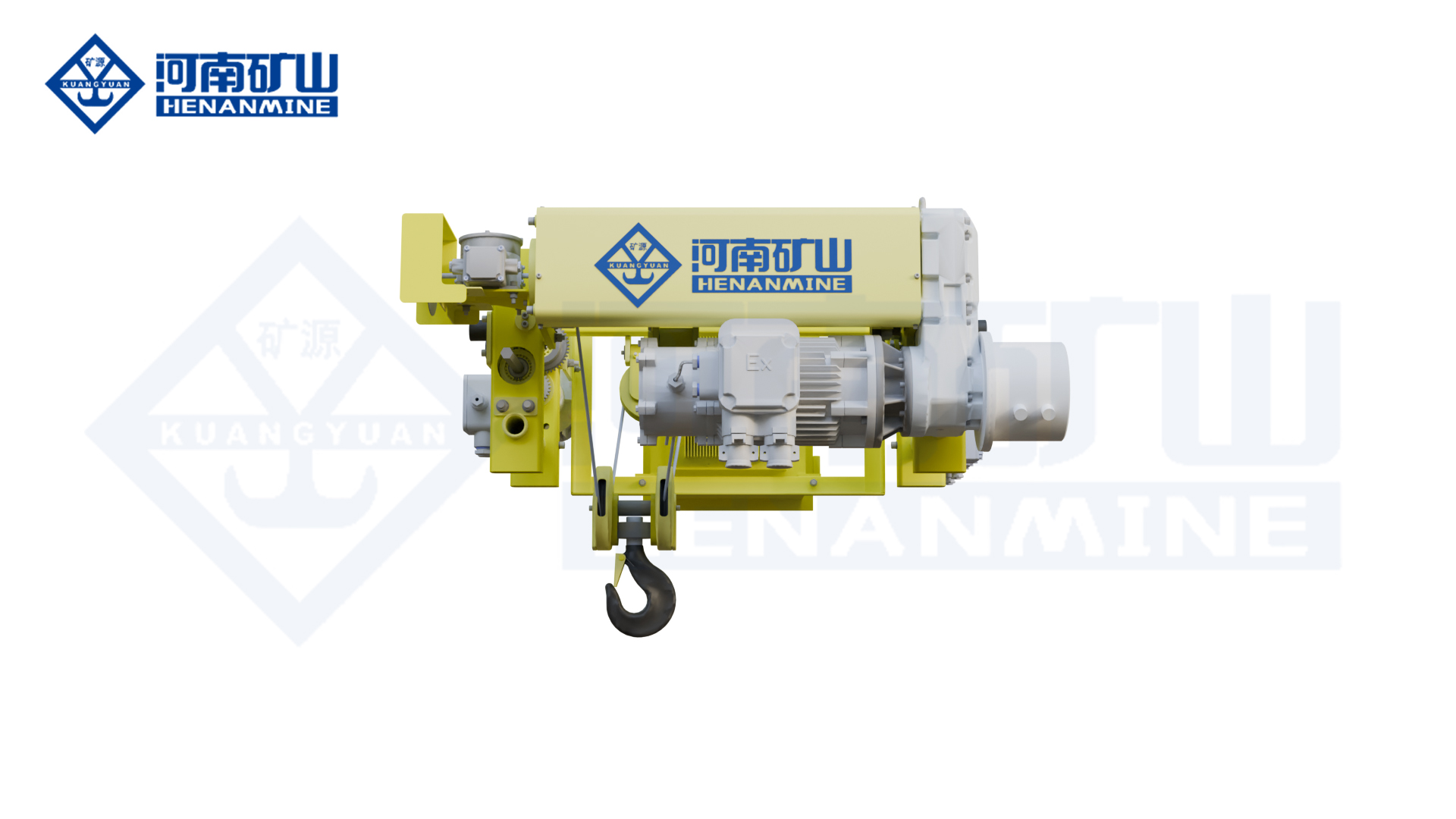
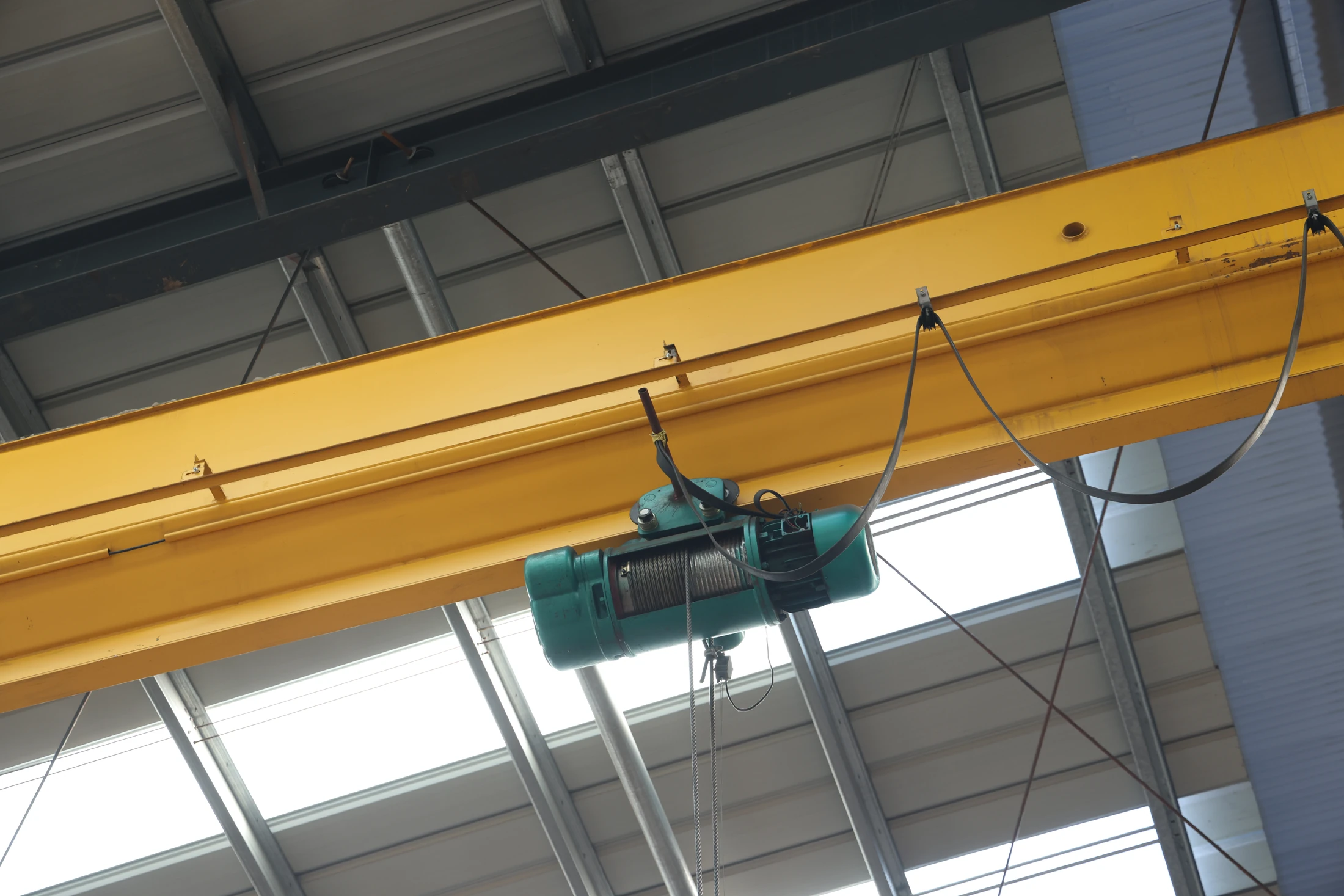
Electric wire rope hoists handle lifting on monorails and compatible overhead, gantry or jib cranes. Compare CD, KS1, KS, KSS and BKS by general-purpose duty, available headroom, maintenance access, trolley layout and hazardous-area requirements. Choose the model around the load, lifting height and crane or beam it will work with.
Choose CD for a conventional lifting arrangement, KS1 when the upper hook position is the main constraint, or KS for modular maintenance and integration.
Fixed lifting point, beam-travelling or matched crane installation
Rated capacity
Specified for the workpiece and below-the-hook lifting equipment; CD₁ selection data shown separately below
Lifting height
Selected to reach the required upper and lower hook positions
Lifting speed
Matched to the exact supplied model and rated load; CD₁ reference speeds below
Travel arrangement
Trolley matched to beam flange or the host crane interface
Power supply
Site voltage, phase and frequency stated in the selected-unit offer
Duty
Selected from load spectrum and operating cycle; CD₁ reference data uses FC 25%
Controls
Pendant or agreed radio-control package; control drop and motion commands specified with the order
Fit dimensions
Installed headroom, end approach, beam interface, rope path and overall envelope
Two-speed comparison
MD₁ is a separate model choice; request its own paired speed and motor schedule
CD₁ capacity and lift-height selections
Scroll across for all configuration values.
Rated load · t
Lift-height choices · m
CD₁ hoisting · m/min
Travel choices · m/min
Hoist motor · kW
Travel motor · kW
Rope diameter · mm
Rope construction
Track section code
0.25
3 / 6 / 9
8
20
0.4
0.06
3.6
6 × 19
16–22b
0.5
3 / 6 / 9
8
20 or 30
0.8
0.2
4.8
6 × 37+1
16–28b
1
6 / 9 / 12 / 18 / 24 / 30
8
20 or 30
1.5
0.2
7.7
6 × 37+1
16–28b
2
6 / 9 / 12 / 18 / 24 / 30
8
20 or 30
3
0.4
11
6 × 37+1
20a–32c
3
6 / 9 / 12 / 18 / 24 / 30
8
20 or 30
4.5
0.4
13
6 × 37+1
20a–32c
5
6 / 9 / 12 / 18 / 24 / 30
8
20 or 30
7.5
0.8
15
6 × 37+1
25a–45C
10
9 / 12 / 18 / 24 / 30
7
20 or 30
13
0.8 × 2
15
6 × 37+1
30T–45c
16
9 / 12 / 18
3.5
20
13
0.8 × 2
17.5
6 × 37+1
30T–45c
20
9 / 12 / 18
4
20
18.5
0.8 × 4
19.5
6 × 37+1
40b–63c
CD₁ reference data: three-phase AC 380 V / 50 Hz, FC 25%. Each row lists the lift heights available within that capacity group; travel figures are alternative selections, not two speeds automatically included. The quotation must identify the exact supplied model rather than assuming CD and CD₁ labels are interchangeable. Track section codes are not flange widths in millimetres; approve the actual beam section and trolley fit on drawing.
Repositions the motor and rope drum to reduce the installed hoist height. Consider KS1 where tall machinery, a low roof or an existing crane limits the highest hook position. Compare the actual hook-height drawing with your building section.
Uses modular motor, reducer and brake assemblies with standardized interfaces. Choose KS where maintenance access and equipment integration matter. Add status monitoring only when the required hardware, data connection and plant interface are included in the supply.
Motor, reducer and brake with modular standardized interfaces
Rated capacity
Selected for the complete suspended load and working cycle
Lifting height
Selected to cover the required hook route
Lifting and travel speeds
Paired with the chosen capacity, drive and mounting
Mounting interface
Specified for the supporting beam, trolley or host crane
Maintenance clearance
Access to each serviceable module shown on the installation drawing
Electrical interface
Heavy-duty plug arrangement defined for the supplied configuration
Connector protection
IP55 applies to the specified heavy-duty connector; whole-hoist enclosure protection is specified separately
Status monitoring
Optional scope requiring agreed sensors or hardware, communications and platform integration
Power and controls
Site supply and operator-control arrangement stated in the technical offer
Duty
Established from load pattern, lifts per hour and shifts per day
Single-hook trolley and explosion-proof hoists
Choose the trolley architecture and protection scope for the installation. KSS and BKS address different requirements; neither substitutes for checking the host structure and site conditions.
Combines one lifting hook with paired running-gear assemblies. Select KSS around the host crane interface, wheel loads and hook coverage, with lifting and travel speeds defined in the variable-frequency control package.
Applicable zone or division and equipment group specified by the project
Atmosphere and temperature
Substance, temperature requirement and ambient conditions supplied with the enquiry
Protection marking
Exact assembly marking and certificate scope agreed for the offered equipment
Rated capacity
Selected for the maximum load on the hook and the classified-area duty
Lifting height and speeds
Specified as one load, lift and drive configuration
Mounting scope
Fixed lifting point or matched travelling installation
Trolley and travel drive
Protected scope identified for all supplied travel components
Controls and power feed
Electrical components and installation interface included in the protection-scope review
Power supply
Voltage, phase and frequency confirmed for the selected protected assembly
Approval drawing
Headroom, hook path, trolley fit and maintenance clearance
Documents
Configuration-specific conformity and test documents, identification and operating instructions
Site acceptance
Installation, electrical connection, inspection and commissioning responsibilities agreed before order
Capacity, lift height, speed, duty and mounting must belong to one selected-unit schedule. The CD₁ table applies to that reference series; KS1, KS, KSS and BKS are selected to their own project specification and drawing.
Budget planning
How much does an electric wire rope hoist cost?
For a conventional CD hoist with an electric trolley and 9 m lift, allow US$700–2,400 per set across the 2–5 t configurations below. Capacity, lift, duty, trolley fit, controls and protection requirements determine the final price.
Preliminary equipment budget · USD per set · 26 October 2026
CD capacity
Lifting / travel arrangement
Budget range · USD
2 t
9 m lift · electric trolley
US$700–1,400
3 t
9 m lift · electric trolley
US$900–1,800
5 t
9 m lift · electric trolley
US$1,200–2,400
These are preliminary planning estimates for single-speed CD equipment with an electric trolley, pendant control, 9 m lift and 380 V / three-phase / 50 Hz supply. They are not firm quotations. Confirm the hoist, trolley, controls and technical documents in one itemized offer. KS1, KS, KSS, BKS and special-duty packages require separate selection and pricing.
Supporting steelwork, crane bridge or runway, power-feed installation, freight, import duties, taxes, site electrical work, installation and commissioning are excluded from these equipment budgets. Longer lifts, dual-speed or variable-frequency controls, destination conformity and hazardous-area protection can change the price.
800 mm of headroom: check the highest hook position
A workshop needs the lower-hook centre to reach 5.2 m above the floor. With the agreed support reference line at 6.0 m, the available installed headroom is 800 mm. A candidate arrangement requiring 950 mm would reach only 5.05 m, leaving the hook 150 mm too low.
A KS1 proposal can be compared against that 800 mm requirement using a dimensioned drawing at the same reference line. Check the hook block, lifting attachment, load height and nearby services as well as the hoist body. A longer rope does not raise the highest hook position.
Include your required rated load and operating cycle in the same enquiry. The example explains the geometry; it does not establish an 800 mm headroom rating for every KS1 configuration or increase the capacity of an existing crane.
Wire rope hoist installed beneath a workshop beam. The dimensions in the retrofit example are illustrative and do not describe the pictured unit.
Electric wire rope hoist buying questions
Which electric wire rope hoist should I choose?
Start with the lifting task. CD covers conventional fixed or travelling arrangements; KS1 addresses restricted headroom; KS emphasizes modular assemblies and service access; KSS uses one lifting hook with paired running gear; BKS requires hazardous-area selection. Provide capacity, lifting height and the supporting beam or crane layout to narrow the choice.
What is the difference between CD and MD wire rope hoists?
CD₁ reference configurations use a normal lifting speed, while MD₁ adds a slower lifting speed for positioning. For example, the 5 t reference uses 8 m/min for CD₁ and 0.8 / 8 m/min for MD₁. Request the exact model, speed pair, motor and controls as a complete schedule; a second speed is not an automatic CD upgrade.
What load should I use for a 5 ton or 10 ton hoist enquiry?
Include the workpiece and below-the-hook equipment such as slings, a spreader beam, a grab or a lifting magnet. State kilograms or metric tonnes to avoid confusion with US short tons. The support review also includes hoist and trolley self-weight and the applicable operating loads; do not confuse those structural loads with the payload rating on the hook.
Does low headroom mean a greater lifting height?
Low headroom reduces the space above the highest usable lower-hook position for a selected installation. Lifting height is the required vertical hook travel. Compare actual headroom dimensions at the same support reference, plus hook block and load clearances, rather than relying on a general percentage reduction.
Does KSS have two lifting hooks?
The configuration shown here has one central lifting hook and paired travel assemblies. It is not a two-hoist synchronized lifting system. If a long load needs two independent lifting points, specify that requirement separately along with the lifting-point spacing and operating sequence.
Can the hoist fit an existing beam or replace an old crane hoist?
Send a beam section or trolley-rail drawing, support elevation, required hook positions and the old hoist nameplate if available. Check flange or rail fit, wheel loads, approach distances, power and controls. A replacement hoist does not increase the rated capacity of the crane bridge, runway or building.
Which duty, power supply and speed should I specify?
Provide lifts per hour, shifts per day, the normal and maximum loads, and whether slow final positioning is needed. State voltage, phase and frequency. The selected offer should pair lifting and travel speeds, motors, brakes, controls and duty for the actual work cycle.
What documents are required for an explosion-proof hoist?
Send the site classification, substance, temperature and destination requirements. Require the exact equipment marking and documents covering the supplied hoist, trolley, controls and electrical components. A protected motor or a generic certificate alone does not establish approval for the whole installation.
Can I order one hoist, and what should the quotation include?
Send a one-unit requirement if that is your project. Ask the written offer to confirm accepted quantity, the selected model and drawing, included trolley and controls, inspection and operating documents, production and shipping dates, delivery terms, installation responsibilities, warranty terms and spare-parts support.
When should I compare an electric chain hoist?
For a workstation lift, compare load, hook travel, headroom, duty and mounting against the same brief. An electric chain hoist may suit the task. For a complete lifting system, compare the host overhead crane or gantry crane as well.
Compare the range
Electric wire rope hoist specification comparison
Compare the installation and selection requirements, then open the product name for its details.
Capacity and lift paired with the required protection scope
Assembly marking, certificate scope and site classification
CD₁ capacity and height choices apply to that reference series. For KS1, KS, KSS and BKS, request one load–height–speed schedule and a dimensioned arrangement for the equipment offered.
Get an electric wire rope hoist quote
Send the capacity or load weight, lifting height, quantity and destination. Add the preferred model if known. A beam photo, crane drawing or old hoist nameplate helps with trolley selection and replacements.
Include site voltage and any headroom, duty or hazardous-area requirement. Request a technical drawing and an itemized commercial offer for the selected hoist package.